
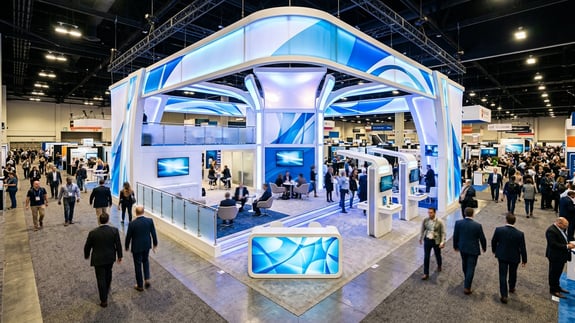
The choice between a 10x20 vs 20x20 trade show booth is a scaling decision, not just a size decision. A 10x20 is a 200 sq ft inline space; a 20x20 island is 400 sq ft open on all four sides. With a modular system, you scale up between them instead of starting over.
Key Takeaways
-
A 10x20 is a 200 sq ft inline booth open to the aisle; a 20x20 is a 400 sq ft island open on all four sides, so the jump doubles space and changes how visitors reach you.
-
The real cost of a 20x20 island is structure, hanging signage, and 360-degree design, not just twice the floor rental.
-
A 10x20 engineered as a modular kit of parts can expand into a 20x20 island, reusing most components instead of being scrapped.
-
Buying a booth that can't grow is the scalability trap; designing for the next size up on day one is cheaper than rebuilding later.
What changes when you go from a 10x20 to a 20x20?
The biggest change going from a 10x20 to a 20x20 is booth type, not square footage. A 10x20 is an inline booth: it sits in a row with a back wall, opening to the aisle in front. A 20x20 is an island: it stands alone with aisles on all four sides, so visitors approach from every direction. That shift rewrites how your booth has to work.
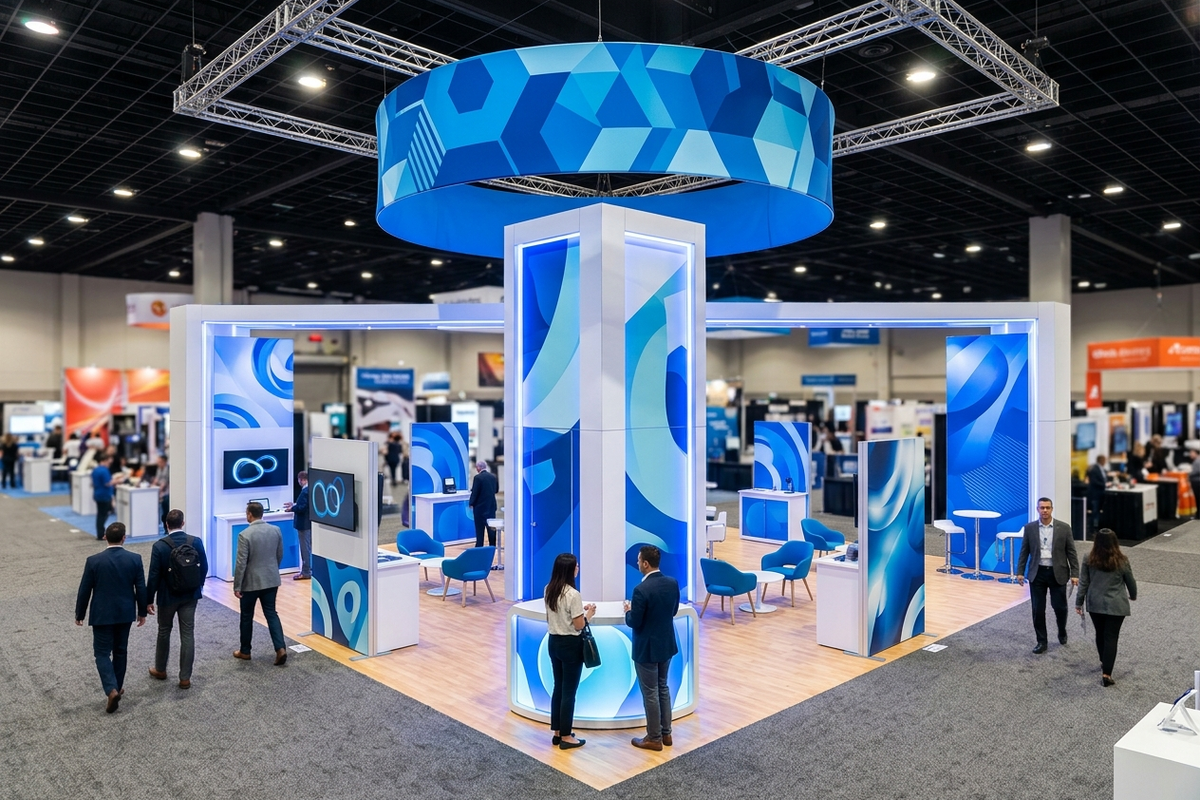
An inline 10x20 hangs its whole story on the back wall. Your graphics and sightline point one way, toward the aisle. A 20x20 island has no back wall. The structure must read from 360 degrees: a tall central element or hanging sign pulls people in from across the hall, and zones must work from every approach. You gain visibility on every side and lose the simple single-direction layout.
Traffic flow changes too. A 10x20 funnels visitors past one face; you stage "attract" at the aisle and "engage" deeper in. A 20x20 takes traffic from four directions, so you need a layout that invites entry from any side and a full team to staff it. An island with empty corners reads as a dead booth.
Is a 20x20 island worth the budget jump?
A 20x20 island is worth the jump when your goals have outgrown what an inline booth can do: a product launch, a high-traffic show, an experience that needs multiple zones. It's the wrong move if you're only chasing a bigger number. Match the size to the job.
Here's the honest part on cost: a 20x20 is not simply twice the price of a 10x20. Space rental does roughly double, but the rest scales differently. An island adds structure, hanging signage with its own rigging and labor fees, heavier shipping and drayage, more electrical, and a bigger install crew. A bigger footprint multiplies nearly every line item.
The question isn't "can we afford 400 square feet." It's "do our goals justify what a 20x20 actually costs." When they do, an island turns your brand into a destination on the floor. When they don't, a well-designed 10x20, or a peninsula open on three sides, gets you most of the presence for less.
What is the scalability trap?
The scalability trap is buying a booth that looks great at its current size but can't grow, so the day you need more space you start from zero. It's the most expensive mistake in exhibiting, because you pay twice: once for the booth you outgrew, and again for the replacement.
It happens quietly. A brand buys a sharp 10x20 built as a fixed structure. Two years later they land a flagship show that calls for an island, and none of it carries over: panels sized wrong, graphics that won't break into sections, a frame that won't extend. The original investment becomes storage.
The fix is to design for growth before you need it. A booth engineered as a modular kit of parts can change footprint without being scrapped. Our breakdown of scalable trade show booths covers the engineering, but the principle is simple: components sized to combine, graphics in swappable sections, and a structure that adds zones instead of replacing the core.
How do you scale a 10x20 into a 20x20 island?
You scale a 10x20 into a 20x20 by engineering it modular from day one, so the same components reconfigure into a larger footprint rather than a separate booth for every scenario.
Done right, the same system does three jobs:
1. Splits down for small shows. A modular 10x20 separates into two 10x10 inline setups, so you can cover two regional shows at once or scale down a budget year without buying new.
2. Runs as your standard 10x20. The everyday configuration for most of your calendar.
3. Expands into a 20x20 island. For your flagship event, the same panels, structures, and graphics combine into a four-sided island, with new zones added instead of a full rebuild.
The components that carry over are the ones engineered to: aluminum framing in compatible increments, lightboxes and counters that relocate, and large-format graphics in sections that re-skin to a new layout. What you add for the island is the 360-degree elements an inline booth never needed, like a hanging sign and a tall central feature. Most of the spend transfers; you invest in the new pieces, not the whole booth.
When the same team designs, engineers, and fabricates your booth in-house, scale gets planned into the structure on day one. See a custom trade show exhibit design built for an experience, not just a single show.
Should you rent or buy when you scale up?
The answer turns on frequency. The detailed break-even math is covered in renting vs buying a trade show booth, but the short version: if a 20x20 island is an occasional flagship play, renting up while owning your core 10x20 often wins. If islands are becoming the norm, a modular system you own makes more sense. Compare custom trade show exhibits and exhibit rentals, or start with how to choose a trade show booth size if you're still deciding on footprint.
Frequently Asked Questions
How much bigger is a 20x20 booth than a 10x20?
A 20x20 is twice the size of a 10x20: 400 square feet versus 200. The bigger difference is type, though. A 10x20 is an inline booth with a back wall; a 20x20 is an island open on all four sides.
Is a 20x20 always an island booth?
Most commonly, yes, but the same footprint can be configured as a peninsula, open on three sides with one shared back wall, for island-style visibility at a lower cost. Available floor space and your budget usually decide which.
Can I reuse my 10x20 booth when I upgrade to a 20x20?
Yes, if it was built to scale. A modular 10x20 with compatible framing, relocatable counters, and graphics in swappable sections can reconfigure into a 20x20 island, so most of your original investment carries over. A fixed-structure 10x20 usually cannot, which is the scalability trap.
Does a 20x20 island cost twice as much as a 10x20?
No, usually more than double. Space rental roughly doubles, but a 20x20 adds structure, hanging signage and rigging, heavier drayage, more electrical, and a larger install crew. A bigger footprint multiplies nearly every line item. Budget with a detailed proposal that lists each cost, not just floor rental.
How many staff do I need for a 20x20 island booth?
A 20x20 island needs a full team so every side stays covered: visitors approach from four directions and empty corners read as a dead booth. A 10x20 runs comfortably on two to four people. Plan staffing into your size decision, not after it.
What's the smartest way to plan for booth growth?
Design for the next size up before you need it. Buy a modular system engineered to reconfigure across footprints so a 10x20 can split into two 10x10s or expand into a 20x20 island from one investment. Planning for scale on day one costs far less than rebuilding from scratch.
Ready to scale your booth the smart way?
We design, engineer, build, and install every size in-house across our Cerritos and Las Vegas facilities, so what you approve in 3D is exactly what shows up on the floor. Tell us your show calendar, your goals, and your budget, and we'll plan a booth that scales without starting over. Explore your options and let's build something that stands out.
By Rena Patton — Co-founder of Exhibit Options, a single-source exhibit house since 2005, designing, engineering, fabricating, and installing custom trade show exhibits and rentals in-house from its Cerritos, CA and Las Vegas, NV facilities. Veteran-owned and woman-owned.

COMMENTS