
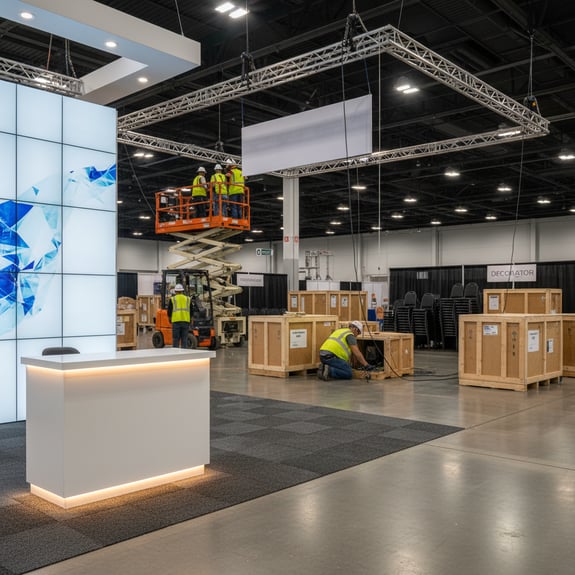
Exhibiting at your first trade show is an exciting experience. You’ve designed your booth, finalized your graphics, and are ready to make a splash. But when invoices start arriving from the show decorator or general contractor, many first-time exhibitors face a harsh surprise: hidden costs that weren’t part of the original plan.
These expenses can quickly inflate your event budget if you are unaware of what to expect. Understanding where these costs come from and how to manage them can help you stay on track and avoid unnecessary stress.
Below is a checklist every first-time exhibitor should review before stepping onto the show floor.
1. Drayage and Material Handling
What it is:
Drayage (or material handling) refers to the cost of moving your booth materials from the loading dock to your exhibit space.
Why it matters:
Even if you ship directly to the venue, you still pay for drayage based on the total weight of your freight—either per pound or by hundredweight (CWT). This fee will cost you in the thousands.
How to manage it:
- Consolidate shipments to minimize weight and number of crates.
- Avoid loose items; they’re billed at higher handling rates.
- Label all materials clearly to prevent delays or misplaced items.
- Compare advance warehouse vs. direct-to-show-site delivery costs.
2. Union Labor Requirements
What it is:
Many convention centers and show organizers have union rules determining who can handle setup, dismantle, and electrical work.
Why it matters:
If you bring your own team, they may still be required to work alongside or under union labor at hourly rates that can exceed your expectations.
How to manage it:
- Ask your exhibit builder or event marketing agency which services require union labor.
- Budget for setup and teardown hours in advance.
- Schedule work during straight-time hours to avoid overtime premiums.
- Get labor orders in early to avoid rush fees.
3. Electrical and Rigging Services
What it is:
Electricity, rigging, and internet connections are all billed separately by the show’s service providers.
Why it matters:
Even simple needs, like powering monitors, lighting, or interactive displays, can require dedicated circuits, certified electricians, or rigging crews.
How to manage it:
- Request electrical layouts from your exhibit designer as early as possible.
- Know your total power requirements and place your order for connections before the deadline.
- Clarify whether the installation and dismantling of lighting or hanging signs requires rigging labor.
- Bring your own power strips and extension cords if allowed (it saves small rental fees).
4. Shipping and Logistics
What it is:
Freight and logistics include the cost of transporting your exhibit materials to and from the venue.
Why it matters:
Unexpected charges like late arrivals, waiting time, or reconsignment fees can pile up, fast!
How to manage it:
- Choose a carrier familiar with trade show schedules.
- Ship early to avoid expedited freight costs.
- Verify target move-in and move-out dates.
- Label return shipments carefully to prevent “forced freight” handling after the show closes.
5. Cleaning, Carpet, and Furniture Rentals
What it is:
Show organizers often provide these services through official contractors.
Why it matters:
A clean, comfortable booth looks professional, but each item, from carpet padding to nightly vacuuming, adds to your total cost.
How to manage it:
- Compare renting vs. bringing your own furnishings.
- Order booth cleaning for multi-day shows to maintain presentation quality.
- Reuse rented items across multiple events when possible.
6. Internet and Technology Services
What it is:
Wi-Fi, wired internet, and display connections are usually provided by the convention center at premium rates.
Why it matters:
Digital demos or lead retrieval systems rely on consistent connectivity, so this is not a corner to cut.
How to manage it:
- Order early. Rates increase on-site.
- Evaluate shared vs. dedicated bandwidth for your booth size.
- Bring backup options, like mobile hotspots, if show rules allow.
7. On-Site Surprises and Contingency Planning
Even with careful preparation, unexpected costs can still occur. Always leave room in your budget for:
- Late order surcharges
- Extra badges or passes
- Forklift rental for heavy items
- Last-minute graphic reprints or signage changes
Pro Tip: A contingency fund of 10–15% of your total exhibit budget can save you from stress when something goes off-script.
The Smart Exhibitor’s Takeaway
Success at your first trade show isn’t just about having a beautiful booth; it’s about planning for the details behind the scenes.
Partnering with an experienced exhibit builder or experiential marketing agency can help you anticipate costs, streamline logistics, and make sure your exhibit investment delivers measurable results.
When you’re ready to exhibit smarter, not harder, the right partner can turn your first show into a foundation for long-term brand growth.
Ready to Plan Your First Exhibit with Confidence?
Partner with Exhibit Options, your full-service exhibit design and experiential marketing agency. From concept to completion, our team helps first-time exhibitors anticipate costs, avoid surprises, and bring their brand vision to life on the show floor.

COMMENTS