
Trade shows move quickly. Attendees make decisions in seconds, and most of those decisions happen long before anyone starts a conversation. It really wasn’t that long ago that preparing for an event felt more straightforward, but today the pressure to deliver measurable results has never been higher. Marketing and event teams are expected to create spaces that work harder, feel more intentional, and tell a story instantly.
One of the most powerful tools in achieving that impact is often overlooked. Materials.
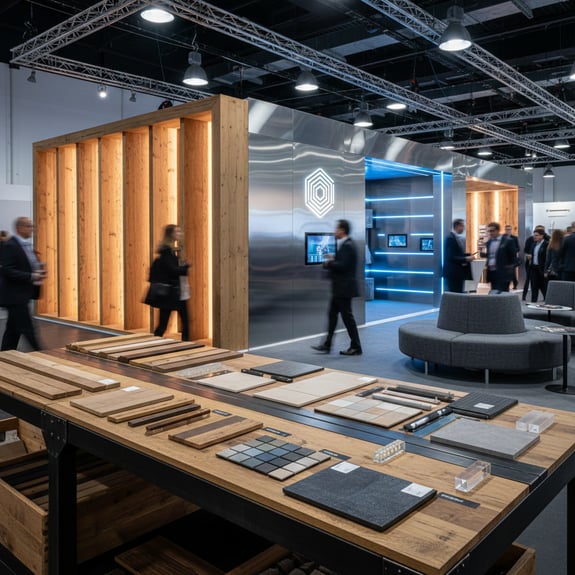
Before a message is read or a demo begins, the materials, textures, and finishes in a booth have already shaped how visitors perceive a brand. Warm woods, precise metals, soft fabrics, glossy surfaces, or industrial concrete all create immediate emotional responses that influence trust, innovation, and quality.
This approach aligns directly with where trade show strategy is headed. Industry trend analyses highlight a clear shift toward immersive, emotionally resonant environments where success is driven by intentional engagement rather than footprint alone. Modern attendees want to touch, explore, and experience a space, not simply observe it. Materials are at the center of that transformation.
Why Material Choices Matter More Than Ever
In a crowded trade show landscape, brands need more than visibility. They need presence. Materials set the tone for that presence and prime visitors with expectations about experience, value, and brand integrity.
Across the industry, recent trend analyses point to a clear shift in what drives trade show success. Exhibitors are moving away from static displays and toward multisensory, emotionally resonant environments that encourage exploration and engagement. Visitors want to feel something the moment they enter a space, and material choices play a central role in creating that reaction. When finishes, textures, and surfaces align with a brand’s narrative, attendees begin forming a connection long before a single word is spoken.
Human perception is deeply sensory. Textures and finishes influence how people interpret reliability, comfort, innovation, and personality. Today’s most effective experiential marketing agencies treat materials as core components of brand communication because they can convey intention more quickly than signage or product displays.
Warm Wood or Cool Metal: What Story Are You Telling?
Material choices shape the emotional foundation of the booth. Consider two very different environments:
One uses warm wood tones, soft lighting, and matte textures.
The other relies on high gloss surfaces, lighting accents, and polished metal.
Each tells a distinct story.
Warm Woods and Natural Textures
Ideal for brands that want to communicate approachability, craftsmanship, wellness, sustainability, or lifestyle-driven values. These materials create calm within a busy environment and invite visitors to slow down.
Metallics and High Gloss Finishes
A strong match for brands that emphasize innovation, precision, technology, or modern engineering. These materials feel clean, advanced, and future-oriented.
Soft Touch Materials and Upholstery
Perfect for industries centered around comfort, healthcare, hospitality, or consumer experiences. These surfaces humanize the booth and encourage interaction.
Industrial Surfaces Like Concrete or Stone
Well-suited for manufacturing, robotics, energy, or construction brands. They convey strength, durability, and stability.
As trade show environments trend toward more natural textures, biophilic surfaces, and hybrid material combinations, these choices matter more than ever. They are the foundation of the emotional experience visitors take with them.
Materials That Shape Behavior and Encourage Exploration
Material transitions can influence how visitors engage with a space. As experience design continues to evolve, many of the most effective trade show environments now incorporate tactile moments that prompt visitors to explore, touch, and interact. This mirrors a broader industry movement toward creating spaces that encourage discovery through movement and play, rather than passive observation.
When thoughtfully applied, materials can:
- Highlight focal points
- Encourage dwell time
- Differentiate zones within the booth
- Create natural stopping points
- Signal where demos or conversations should happen
These sensory cues help transform a traditional exhibit into a destination that feels intuitive, memorable, and emotionally engaging. Visitors may not consciously identify why the booth feels welcoming or easy to navigate, but the materials beneath their feet and in their hands have already influenced the experience.
Material Systems That Scale Across Every Booth Size
The most recognizable trade show exhibits create consistency across every show, regardless of footprint. Treating materials and finishes as part of a scalable brand system ensures that a company’s presence feels unified from a 10-by-10 to a 40-by-40 island.
This includes:
- Signature textures and finishes
- Repeating lighting styles or accents
- A cohesive palette of woods, metals, and fabrics
- Scalable design components for modular or hybrid builds
This mirrors the industry shift toward adaptable, modular environments that look premium without sacrificing flexibility. Material systems support this evolution, ensuring brand consistency at every scale.
How Material Choices Influence Brand Perception
Here are a few examples of how surface choices directly shape visitor impressions:
Matte Black Finishes
Signal luxury, confidence, and exclusivity.
Backlit Acrylic or LED-Integrated Panels
Communicate innovation, digital fluency, and high-tech precision.
Raw Textures Like Reclaimed Wood or Brushed Steel
Convey authenticity, craftsmanship, and an approachable brand ethos.
High Gloss Whites or Clean Acrylics
Suggest precision, cleanliness, and a forward-thinking identity.
These design cues align with current trade show success trends that emphasize clarity, emotional resonance, and memorable sensory moments that extend beyond simple visuals.
When to Choose Custom Materials, Modular Systems, or Hybrid Builds
Custom materials allow brands to create one-of-a-kind environments with rich textures, layered finishes, and exact alignment with brand standards. They are ideal when the goal is to create a premium or deeply immersive experience.
Modular materials support brands with changing footprints, multi-show calendars, or evolving goals. They provide flexibility without sacrificing design integrity.
Hybrid exhibits blend both approaches, a trend that is growing rapidly as brands seek the freedom of modularity paired with the impact of custom details.
This hybrid strategy reflects a broader shift in event marketing, where exhibitors seek personalization, adaptability, and strong ROI across multiple shows.
Creating Immersive Environments Through Material Harmony
A truly immersive environment results from lighting, materiality, architecture, and content working together. Industry trend forecasts consistently highlight a rise in narrative-driven exhibit journeys, in which every design choice shapes how visitors feel and move through the space.
Materials are a key driver of that experience, helping create transitions, emotional beats, and sensory moments that stay with attendees long after they leave. When materials harmonize with lighting and spatial design, the booth becomes a destination rather than a display.
It All Begins in Discovery
The most successful exhibits begin with a strategic discovery process that clarifies brand identity and emotional goals before any design work begins. Material strategy is not a finishing touch. It is the foundation of how the experience will feel.
Key questions include:
- What emotions should visitors feel immediately upon entering?
- How should the materials reinforce brand perception?
- Where should visitors naturally pause or explore?
- Which textures support product storytelling?
- How should materials perform across different booth sizes?
This early alignment is essential for creating a booth that feels both intentional and instinctively engaging.
Conclusion: Materials Turn Brands Into Experiences
Trade shows today are no longer judged solely on architecture or size. Success is defined by engagement, emotional connection, and the ability to create memorable brand moments in an often chaotic environment.
Material choices are one of the most powerful levers exhibitors have to influence those outcomes. They shape emotion, guide behavior, and help transform a booth into a living, tactile expression of the brand.
Exhibit Options combines the strategic insight of an event marketing agency with the craftsmanship of expert exhibit builders to create environments where every material choice is intentional, immersive, and aligned with measurable goals.
Ready to create an exhibit that feels as good as it looks?
Let’s design a material-driven, immersive environment that makes your brand felt, not just seen.
Contact Exhibit Options to start your custom exhibit design.

COMMENTS