
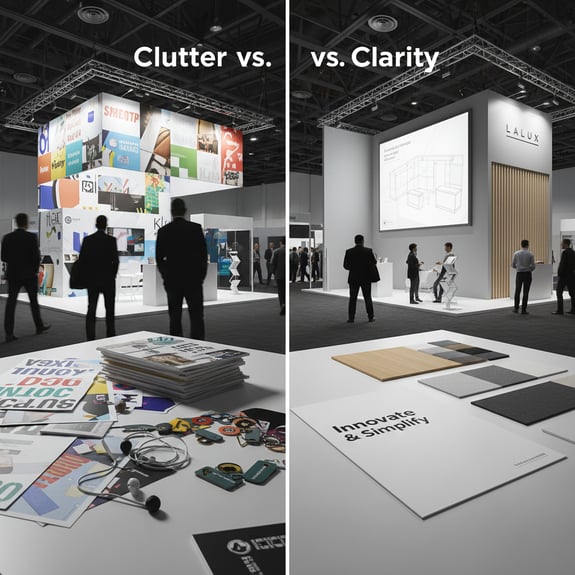
A beautifully designed booth can elevate your brand. A cluttered one can quietly sink it. What many exhibitors do not realize is that clutter is not simply an aesthetic issue. It is a psychological barrier that can stop high-value attendees from ever stepping inside.
The reason is simple. People avoid environments that feel overwhelming. And on a bustling show floor filled with noise, lights, and competing visuals, your booth has only seconds to communicate calm, clarity, and relevance.
This is where booth layout psychology becomes one of the most overlooked drivers of engagement and lead quality.
The Cognitive Load Problem: When Your Booth Makes Visitors Work Too Hard
Cognitive load refers to the mental effort required to understand something. When visitors approach your booth, they are scanning for two things:
- What is this brand about
- Is this relevant to me
If your booth makes it difficult to answer those questions quickly, their brains default to the easiest choice: walking away.
Common cognitive overload triggers include:
- Long paragraphs of text
- Visual noise or too many design elements
- Multiple competing messages
- Cramped layout with unclear pathways
- Excessive product displays without hierarchy
- Staff standing in the wrong places, creating roadblocks
This clutter forces the brain to work harder to interpret the environment, which creates subtle stress. On a crowded show floor, attendees do not have the patience for friction. They gravitate to the spaces that feel effortless.
Why Clean Lines and Focused Messaging Increase Engagement
Minimalism is not a trend in trade show design. It is a strategy.
A clean, open booth with intentional spacing and a focused message delivers several advantages:
- Faster comprehension
Visitors can understand who you are and what you do within seconds. - Reduced stress
Open layouts give the illusion of more space, even in small footprints. - Better brand recall
Simple messages stick longer than busy visuals or lengthy explanations. - Higher approachability
Visitors are more likely to enter when the booth feels welcoming and easy to navigate.
This is why experiential marketing agencies emphasize clean lines and open sightlines. Your booth must be easy to read from the aisle and even easier to enter.
The Flow Factor: Guiding Visitors, Not Blocking Them
Booth flow is one of the most impactful yet ignored elements of trade show exhibits.
Think of your booth as a small retail store. Every inch should guide movement with purpose:
- A clear entry point
- Open pathways that invite people deeper
- Space for natural stopping points
- Strategic product zones
- Easy visibility of your main message
- Deliberate staff placement
When attendees can follow a natural path without bumping into obstacles or staff members, they stay longer. They also feel more comfortable exploring on their own, which leads to more meaningful conversations.
The Messaging Mistake: Too Much Text Kills Engagement
The show floor is not the place for long-form communication. Your website is.
In your booth, messaging must be:
- Short
- Clear
- Benefit focused
- Visible from a distance
Instead of listing every capability, use a single clear statement to set the context. Then let your staff fill in the details during conversations.
When your message is simple, it creates space for curiosity. When it is overloaded, it creates avoidance.
The Space Problem: Why Cramped Booths Repel Your Best Leads
Crowded aisles. Tight corners. Furniture everywhere. Staff blocking traffic.
Every inch of unnecessary clutter makes your booth feel smaller and more chaotic. This is especially damaging for high-value prospects who want space to think and explore.
Open space signals sophistication. It communicates confidence in your brand and your product.
This is why top exhibit builders and experiential design teams prioritize negative space as much as graphic space. The eye needs room to rest, or attendees will mentally check out.
Designing for Attraction: What High-Performing Booths Have in Common
Strong trade show exhibits share a consistent set of design principles:
- Clear focal points that draw attention
- Simple, bold headline message
- Layered visuals that guide the eye
- Clean lines and minimal clutter
- Open pathways that feel intuitive
- Strategic placement of staff
- Limited but purposeful product displays
- Lighting that highlights key zones
These principles reduce cognitive strain, encourage curiosity, and create an experience visitors want to enter.
Small Changes That Immediately Improve Flow and Engagement
If you are revamping an existing booth or planning your next one, start with these high-impact updates:
- Remove one-third of your furniture
- Replace long text blocks with a single bold headline
- Simplify graphics to one primary visual
- Move staff away from the entry point
- Widen pathways whenever possible
- Use lighting to guide attention
- Group products by category rather than scattering them
- Reduce giveaways to one visible, simple option
These small changes create a booth that feels organized, intentional, and inviting.
Final Thought: Clarity Is Your Competitive Edge
A cluttered booth does more than look messy. It actively pushes away the very people you want to attract.
By reducing cognitive load, simplifying your layout, and creating a clear flow, you make it easier for attendees to understand who you are and why they should invest their time with you.
In a sea of visual noise, clarity wins. And the brands that master it are the ones attendees remember long after the show.
Ready to design a booth that attracts high-value traffic with clarity and intention?
Explore our exhibit design services and see how strategic layout transforms engagement → View Our Custom Exhibits
Or want expert insights before your next show? Connect with our team for personalized recommendations on layout, flow, and messaging.

COMMENTS