
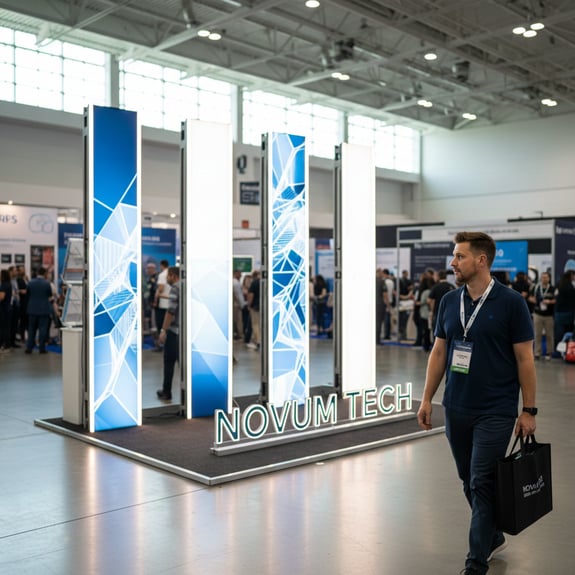
On a crowded trade show floor, space is rarely the differentiator exhibitors think it is. Footprints vary. Budgets fluctuate. Rules change from show to show. Yet some booths consistently draw attention, feel confident, and invite engagement, regardless of size.
The difference is not width. It is intention.
High-performing trade show exhibits command attention by designing upward and inward, not outward. They use vertical design and strategic lighting to shape perception, guide the eye, and create presence that feels deliberate and immersive. When executed well, a 10x10 can feel just as purposeful as a 30x40, not because it imitates scale, but because it uses design psychology intelligently.
Presence Is Psychological Before It Is Physical
Attendees do not evaluate booths analytically. They respond instinctively.
As people move through an exhibit hall, their eyes scan vertically and horizontally, searching for visual anchors that signal relevance and credibility. Booths that feel flat or visually chaotic are filtered out almost immediately. Booths that establish hierarchy and structure earn attention.
This is why presence is not about occupying more square footage. It is about controlling how a space is perceived in the first few seconds.
Vertical design and lighting are powerful because they align with how people naturally process environments. They create order, focus, and confidence without relying on sheer size.
What “Going Taller” Really Means
Going taller does not simply mean adding height. It means designing vertically with purpose.
Effective vertical design uses the full allowable volume of a booth to establish hierarchy. Primary brand messaging is positioned higher, where it can be seen from farther away. Supporting messages, product cues, and interactive elements are placed lower, where engagement happens up close.
This vertical layering helps attendees quickly understand what matters most. It creates a clear visual path from first impression to deeper exploration.
Depth amplifies this effect. Changes in plane, framing, material, and finish introduce shadow and contrast that the eye reads as scale. Even subtle dimensional shifts can make a booth feel architectural rather than temporary.
When vertical design is intentional, it does not overwhelm. It organizes.
Why Vertical Elements Signal Authority
Humans associate verticality with importance and stability. Tall, structured environments feel more credible than low, fragmented ones.
In trade show exhibits, vertical elements act as visual anchors. They define boundaries, frame the brand, and give the space a sense of order. This is especially impactful in smaller footprints, where clarity matters more than abundance.
A booth that uses vertical design well communicates confidence. It signals that the brand understands its message and has deliberately chosen how to present it. That perception carries weight before a conversation ever begins.
This is how a compact booth can feel intentional rather than constrained.
Lighting as a Tool for Focus and Flow
Lighting is one of the most underutilized tools in trade show marketing, yet it has an outsized impact on how a space feels and functions.
Strategic lighting does not simply illuminate. It directs attention.
By highlighting key vertical elements, lighting reinforces hierarchy. Brighter areas draw the eye to primary messages. Softer illumination supports conversation zones. Backlighting and edge lighting add depth, separating layers and enhancing dimension.
Lighting also establishes mood. Warm, even light makes a space feel inviting. Focused accents create moments of discovery. Together, these choices shape how long attendees stay and how comfortable they feel engaging.
Importantly, lighting works across booth sizes. It does not rely on scale. It relies on intention.
Guiding the Eye Without Forcing Interaction
One of the hallmarks of strong experiential design is that it guides behavior subtly.
Rather than pulling attendees in with aggressive tactics, effective booths lead the eye naturally. Vertical elements create upward movement. Lighting establishes visual rhythm. Depth invites closer inspection.
This quiet guidance makes engagement feel intuitive. Attendees understand where to look, where to pause, and where to step next without being directed. Conversations begin more naturally, and interactions feel more meaningful.
For event and marketing teams focused on quality engagement, this matters. A booth that feels comfortable and clear supports better outcomes.
Making Small Booths Feel Intentional
Small booths succeed when they are designed with discipline.
Instead of trying to say everything at once, high-impact 10x10 and 10x20 exhibits focus on one clear story. A vertical hierarchy ensures the story is communicated efficiently. Lighting ensures it is seen and felt.
When content is layered thoughtfully and supported by lighting, the booth feels curated rather than crowded. Attendees do not experience it as “small.” They experience it as focused.
This is the distinction that allows a compact booth to hold its own next to larger exhibits. Not because it competes on scale, but because it competes on clarity.
Cohesion Is What Creates Presence
The most effective trade show exhibits feel cohesive. Graphics, structure, lighting, and messaging work together as a single system.
Nothing feels accidental. Nothing competes unnecessarily.
This cohesion is what creates presence. Attendees may not consciously identify each design decision, but they respond to the confidence it projects. The booth feels complete. The brand feels credible.
Experiential marketing agencies prioritize this integration because it transforms booths from displays into environments. The space does not just show information. It supports connection.
Constraints Sharpen Strategy
Every trade show environment comes with constraints. Booth sizes vary. Rules differ. Budgets are finite.
Great exhibit design does not fight these constraints. It uses them to sharpen strategy.
When width is fixed, vertical design becomes more important. When height is limited, hierarchy and depth do more work. When overhead options vary, lighting discipline separates strong booths from forgettable ones.
These limitations push brands toward smarter decisions. They encourage focus, intention, and purpose. The result is often a stronger experience than one built on excess.
Why the Right Partner Makes the Difference
Designing a booth that commands attention across different environments requires more than good visuals. It requires experience, foresight, and a deep understanding of how perception, behavior, and execution intersect.
A strategic event marketing agency begins with goals, not dimensions. What needs to be noticed first? What should be discovered over time? How should the space feel?
From there, experiential design choices are made holistically. Vertical elements are planned for impact. Lighting is integrated early. Every decision supports both the experience and flawless execution.
This is how brands consistently turn any footprint into a strategic encounter.
Presence Is Designed, Not Measured
Trade show presence is not measured in square feet. It is created through clarity, hierarchy, and thoughtful use of space.
By going taller in perception and smarter in execution, brands can command attention without expanding their footprint. Vertical design and strategic lighting make booths feel intentional, confident, and inviting, whether the space is 10x10 or 30x40.
The most successful trade show exhibits are not the widest. They are the most intentional.
If your next trade show footprint is fixed, your strategy does not have to be. Partnering with an experienced exhibit design and experiential marketing agency can help transform constraints into high-impact opportunities. Connect with Exhibit Options to explore how intentional design can elevate your next show.

COMMENTS