
How Strategic, End-to-End Experiences Drive Measurable Trade Show Impact
It really was not that long ago that trade show planning felt simpler. Book the space. Design the booth. Ship the crates. Show up and hope the right people walk the aisle. Today, that approach puts brands at a disadvantage.
Event and marketing managers are under more pressure than ever to justify budgets, prove ROI, and deliver experiences that stand out in crowded halls filled with competing messages. Trade show marketing has evolved, and so has the role of an experienced event marketing agency. Success now depends on treating every event as a connected brand ecosystem, not a standalone booth.
That is where strategic event marketing comes in.
At its best, event marketing is not about logistics alone. It is about creating intentional, immersive experiences that connect planning, design, storytelling, and execution into a single, cohesive strategy. This philosophy guides Exhibit Options' approach to event marketing for trade shows, roadshows, and global programs.
Why Event Marketing Has Become More Complex and More Valuable
Trade shows are no longer just about visibility. Attendees arrive informed, selective, and short on time. They expect relevance, clarity, and interaction. A booth that looks good but lacks purpose or flow is easy to pass by.
Modern event marketing must answer a few critical questions:
- What role does this event play in the larger marketing strategy?
- How does the physical space support brand storytelling and business goals?
- What experience does the audience have before, during, and after the show?
- How will success be measured beyond foot traffic?
An experiential marketing agency brings structure to this complexity. By aligning creative, logistics, and engagement strategy from the start, brands can turn trade show exhibits into high-performing brand encounters rather than isolated moments.
Event Marketing as a Holistic Brand Strategy
Effective event marketing starts long before the show floor opens. It begins with a strategic conversation about objectives, audience, and outcomes. Is the priority lead generation, brand positioning, product education, or relationship building? The answer shapes every decision that follows.
From there, a holistic approach considers the entire audience journey:
- Pre-show messaging that creates anticipation and sets expectations
- On-site experiences that feel intentional, immersive, and easy to navigate
- Post-show touchpoints that reinforce value and drive follow-up
This mindset transforms event marketing from a tactical execution into a strategic partnership.
Trade Show Planning and Logistics That Reduce Stress and Increase Focus
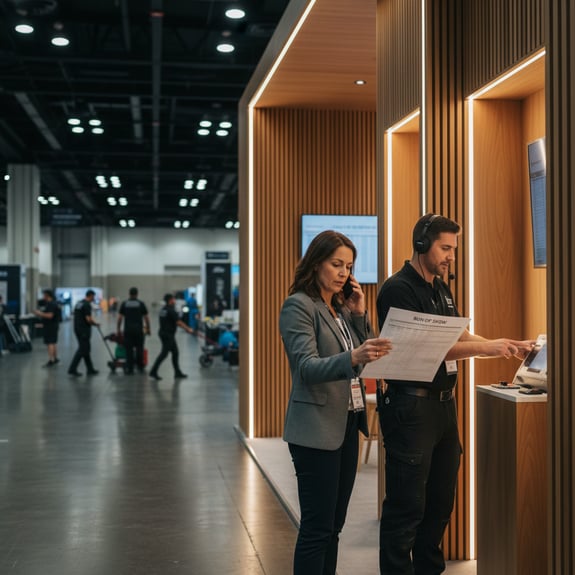
Few aspects of trade show marketing create more anxiety than logistics. Show services, labor rules, freight timelines, electrical orders, rigging, AV coordination, and on-site schedules can quickly overwhelm even experienced teams.
Strategic trade show planning and logistics remove that burden. When managed holistically, logistics become an enabler rather than a distraction. The goal is simple: allow internal teams to focus on engaging their audience while a trusted partner manages the moving parts behind the scenes.
End-to-end coordination typically includes:
- Show services management for electrical, labor, AV, rigging, and freight
- Vendor and partner coordination
- Registration support and on-site scheduling
- On-site supervision to ensure seamless execution
This level of support is especially valuable for brands that exhibit at multiple events or manage national and global programs, where consistency and reliability are critical.
Creative and Strategy That Turn Space Into Story
A well-designed booth attracts attention. A strategically designed experience holds it.
Experiential design focuses on how people move through a space, what they notice first, and how they interact with the brand. Concepts like visitor flow, sightlines, and engagement zones are not abstract ideas. They directly impact dwell time, conversation quality, and lead outcomes.
Creative strategy in event marketing often includes:
- Concept development rooted in brand story and campaign goals
- Audience journey mapping to guide engagement intentionally
- Content planning across live, digital, and social channels
- Messaging frameworks that keep teams aligned
This approach ensures that exhibit design and trade show marketing work together, rather than competing for attention.
Commercial Graphics and Environmental Branding That Shape Perception
Graphics are often treated as decoration. In reality, they are one of the most powerful tools in event marketing.
Large-format graphics, wayfinding systems, and environmental branding shape how attendees perceive and navigate a space. Clear messaging reduces cognitive overload. Thoughtful environmental design creates confidence and encourages exploration.
Commercial graphics and environmental branding may include:
- Large-scale event graphics and signage
- Directional systems that guide visitor flow
- Venue branding, exterior wraps, and entrances
- Branded interiors such as lounges and sponsor areas
When graphics and architecture work together, the result is an environment that feels purposeful, calm, and aligned with the brand.
Brand Activations and Experiences That Invite Participation
Attention is earned through interaction. Brand activations create moments that invite attendees to engage rather than observe.
From pop-ups and sponsorship activations to immersive demos, experiential marketing brings brands to life. Interactive elements such as gamification, AR or VR experiences, and digital touchpoints create memorable encounters that support education and lead capture.
Effective activations are not about novelty for its own sake. They are designed to support specific objectives, whether that is showcasing a product, starting conversations, or collecting qualified data.
Production and Project Management That Protect ROI
Even the strongest concept falls apart without disciplined execution. Production and project management are where strategy becomes reality.
A full-service event marketing partner oversees fabrication, technical production, staging, and on-site support with meticulous attention to detail. This ensures that timelines are met, budgets are respected, and the final experience reflects the original vision.
Post-show reporting and ROI measurement complete the process by connecting effort to outcomes, helping brands refine future strategies with confidence.
Turning Events Into Strategic Brand Experiences
Event marketing today demands more than a beautiful booth or flawless logistics. It requires a partner who understands how experiential design, trade show exhibits, and trade show marketing intersect to drive results.
By approaching event marketing as a holistic brand experience, companies gain more than execution support. They gain clarity, consistency, and confidence across every touchpoint.
When every detail is intentional, and every experience is aligned with business goals, events stop being stressful obligations and become powerful strategic assets.
Ready to Build an Event Experience With Purpose?
For brands looking to elevate their live presence, partnering with an experienced event marketing agency can transform their trade show performance. The right approach turns spaces into strategic encounters and experiences into measurable impact.
To explore how a holistic, custom-tailored event marketing strategy can support your next trade show or event program, connect with Exhibit Options to start the conversation.

COMMENTS